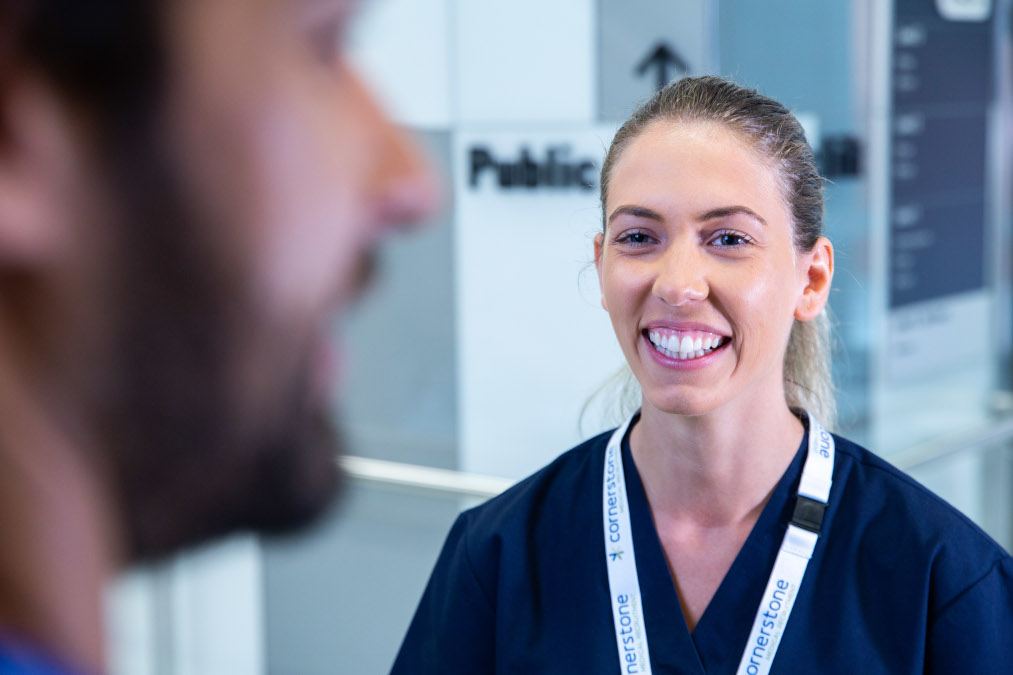
We sat down with new graduate Eloise, Occupational Therapist from Western Australia to ask how her regional locums with Cornerstone have helped her career.
What inspired you to get into occupational therapy?
I have family members who are Occupational Therapists (OTs), so I was always aware of some areas that OTs worked in. I have always wanted to work with people in a healthcare setting. I knew occupational therapy was for me when I discovered how diverse our work can be and how many different types of OT there are, which I like as I’ll never get bored!
Were you always open to relocating regionally or was there a key moment/occasion that inspired you to take the leap?
I have always been keen to work rurally. I have family members and friends who have had experience working rurally in healthcare settings who really highlighted how rewarding working rurally can be.
Where were you living prior? Have you ever lived regionally before?
I was living in Perth with my family. I had never lived regionally before, although I have done some travelling through different parts of the country which are rural locations.
What do you think are the benefits of living and working in a regional area?
- Personal development and growth.
- As a clinician you are exposed to so many situations where you need to be resourceful and you’re forced to develop your initiative and clinical reasoning skills.
- You are exposed to situations you may not get to be exposed to as a new grad in a metro location.
- A much more relaxed lifestyle outside of work.
- Meeting amazing colleagues from all over the country who end up becoming really close friends.

Do you believe this has been more advantageous for your career?
Definitely. You develop skills due to the nature of rural work. Often healthcare services are under-staffed and under-resourced, and consequently you have to step up your game and think outside the box to ensure you are still delivering evidence-based and quality service. I think I am more hirable as a new graduate because I have had these experiences working rurally which have forced me to develop highly commended skills as an OT. Additionally, I think having worked rurally highlights your dedication and passion for the work that you do. You also meet amazing OTs and health professionals, so great for networking too!
Do you believe this has provided you with greater life skills and experience more generally?
For sure. I was really proud of myself to pack up and move to a place where I knew no one and had never been to before. I think the ability to move rurally, make friends and establish a routine that I loved, proved to myself that I can move anywhere in the world and be okay.
What did you love about the Broken Hill region?
The people there. Everyone in Broken Hill is so friendly, the locals, the staff at the hospital, my colleagues in the Allied Health Department. It made settling in so much easier. The surrounding local towns held rodeos and gymkhanas regularly throughout the year which I could not recommend attending enough!

What’s your advice to other graduates about seeking work after study?
Definitely consider working rural! It may seem daunting but the clinical skills, life experience, and friendships you make from it are invaluable. There is a certain way of life in rural and small community towns, and I think everyone needs to experience it.
What was your experience like with cmr?
Amazing! I worked closely with one senior consultant (Faye) throughout my employment and I still can’t believe how easy the whole experience was. Faye went out of her way to clearly communicate the expectations and logistics of the job. Faye helped with organising getting to Broken Hill, and liaised with Broken Hill staff members on my behalf leading up to the employment. Additionally, she would check in regularly throughout my time in Broken Hill to see how I was managing and review my experience at the Broken Hill Hospital.
What are you up to now? Will you look to continue with regional opportunities?
I am currently working in a tertiary hospital in Perth. I will definitely continue to pursue regional opportunities in the future.
If you’re an Allied Health graduate, get in touch with the Allied Health team today to discuss where you’d like to work and current available roles across Australia.
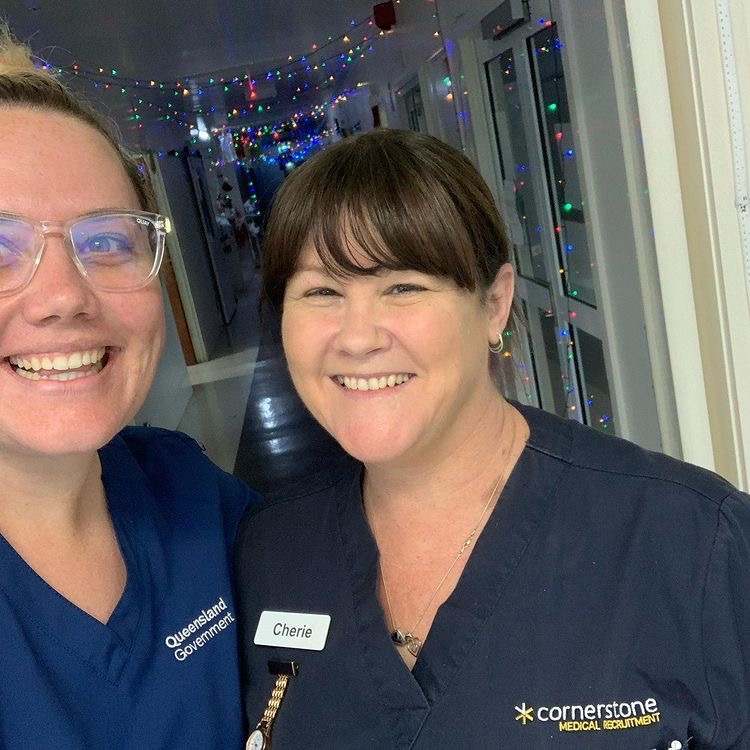
Locuming is a term which many have heard but may not truly understand until they have experienced it. Yet locuming can improve your career opportunities, pay better, strengthen your clinical practice all while allowing you to travel the country. Here we help to demystify what it means to be locum, by following the experiences of Emergency Nurse Cherie from Melbourne.
Why did you originally become a Nurse?
Ever since Cherie can remember she wanted to become a Nurse, 19 years later she can’t imagine herself doing anything else.
“I find nursing to be a very rewarding career. I always feel that I learn something new every day, I love being a Nurse as working in Emergency I get to care for people at some of the worst times of their lives and on occasion see miracles.”
“Trauma is my passion: seeing people survive some of the most horrific injuries and being a part of their journey is a gift. I love the variety my job brings; you never know what is going to come through the door and working with patients of different ages and different acuities provides new challenges every day.”
What drove you to locum?
Cherie began to lose interest in her permanent job and found herself heading towards burnout. Hungry for a new adventure, locuming helped her to reignite her passion for work and bring excitement back into her life.
“I chose to locum as it offers variety in placements around Australia. You get to travel and see places you might have never seen. Agency work provides flexibility for choice of locations, higher pay rates, extra benefits and gives you the opportunity to gain new experiences. It has given me a new passion for my work and life.”
Where have you been on your locum placements?
Through locum work with Cornerstone, Cherie has had the opportunity to travel all over Australia and experience the raw beauty of the country.
“Over the last 2 years I have worked in Port Hedland, Mareeba, Shepperton, Mackay, Broken Hill, Blackwater, Thursday Island and currently I’m in Bairnsdale Victoria”.
“Each place has some amazing and beautiful points of interest. Once I know where I am going, I research and write a list of things to see/do and ask the staff once I begin my contract what is a must see”.

How has locuming helped your career?
Professionally Cherie said she has gained invaluable experience from locuming around Australia.
“I have been In Charge/Acting Nurse Unit Manager in some placements and I have learnt how well staff work together as a team when needed, I’ve also made some wonderful new friends. Working in different locations has also allowed me to learn new equipment such as different ventilators, pumps and ieMR computer programs.”
What is it like to work with Cornerstone?
Having no prior knowledge of locum work, Cherie said she turned to Cornerstone to guide her through the process.
“When I first started locuming I had no idea about all the different agencies around. Cornerstone were extremely helpful in the set-up process and have always been looking for contracts that suit me.”
Cherie appreciated the value that her Recruitment Consultant Becki brought to the job search process, with her specialised knowledge and the one-on-one personalised candidate experience.
“Becki is always professional, helpful and rings me regularly to check in.”
What would you say to other healthcare workers considering locuming?
The past two years for Cherie have been full of new adventures, new opportunities, and new challenges. She couldn’t speak highly enough about her experience with doing locum work.

“It’s the best decision I have made, seeing new places and meeting new people.”
“I would advise anyone thinking of starting to keep their mandatory training up to date, be adaptable to new environments and make the most of your experience by finding things you like to do while on your contacts”.
Over the past two years locum work has allowed Emergency Nurse Cherie to travel all over Australia, experience new lifestyles, develop meaningful relationships and strengthen her skills as an Emergency Department Nurse.
If locum work sounds like something you would like to try, get in contact with Cornerstone Medical Recruitment today on 1300 267 300.

Whether you’re a Medical Admin professional, such as a Medical Receptionist, looking to enhance your career or simply someone wanting to step into the healthcare industry, cmr’s Lead Consultant Ami is here to arm you with the confidence to take your career in health to the next level. She spoke to Jo, who made the transition from a Medical Receptionist to a Practice Manager and asked her how she did it.
What is the job outlook for Practice Mangers?
The healthcare industry is growing at a rapid pace and shows no signs of slowing down, in fact, Ami expressed the demand for practice manages is “at an all time high”.
“Practice Managers are in need; clients are no longer focusing solely on previous practice managerial experience when searching for suitable candidates. Rather, they are looking for candidates with key transferable skills such as industry or software knowledge, that they can train to be successful Practice Managers”.
What is the role of a Practice Manager?
A Practice Manager is one of the most critical and highly valued members of the team in any practice. They are responsible for their staff, practicing medical professionals and their patients. While no two days are the same, key duties undertaken by Practice Managers include: implementing policies and procedures; staffing and scheduling; human resources; managing staff; onboarding; privacy and security management and financial responsibilities.
“As a Practice Manager I still do some reception work whenever the team needs support, but my main responsibilities are ensuring the practice runs smoothly by having the finances in order and being the go-to person for any issues that arise whether that be staff or patients.” Jo said.
What are the benefits of being a Practice Manager?
Practice Manger is an exciting role, that comes with a lot of responsibility and plenty of career rewards. Higher salary, greater responsibility, career progression and growth are the main benefits, according to Ami and Jo.
“The pay is better and the hours are more consistent. You get to be involved in the decision-making process and help the staff out on a day-to-day basis.” Jo said.

What are the key skills needed to become a successful Practice Manager?
As the Practice Manager, you are the main line of communication for the practice, both internally and externally. As such, a successful Practice Manager needs to posses a variety of skills from administration and financing to problem solving and decision making, Strong interpersonal skills and the ability to lead a team. Also having knowledge of the healthcare industry is a plus.
“A good manager must have a broad range of communication styles, have good attention to detail, be a strong organiser, fast problem solver and have the ability to lead with authority and empathy.” Ami Said.
What qualifications do you need to have?
Industry experience is highly favored, however whilst not essential, qualifications such as a Cert III in Business Admin (Medical), a Cert IIII in Health Admin or a Diploma in Practice Management are definitely advantageous.
“Before I became a Practice Manager I had been a Medical Receptionist for several years which gave me invaluable first hand experience. So whilst I didn’t do any formal training as such, when the position of Practice Manager opened up I was able to transfer more skills. Whilst formal training is by no means required it is still beneficial and looked upon highly by employers.” Jo said.
How can Cornerstone help?
We have an in-depth knowledge of the healthcare industry, our relationships with our clients gives us access to up to date information on current market trends, putting our candidates ahead of the game.
For more information on how you can become a Practice Manager, reach out to Ami from the Medical Admin team today on 1300 267 300.
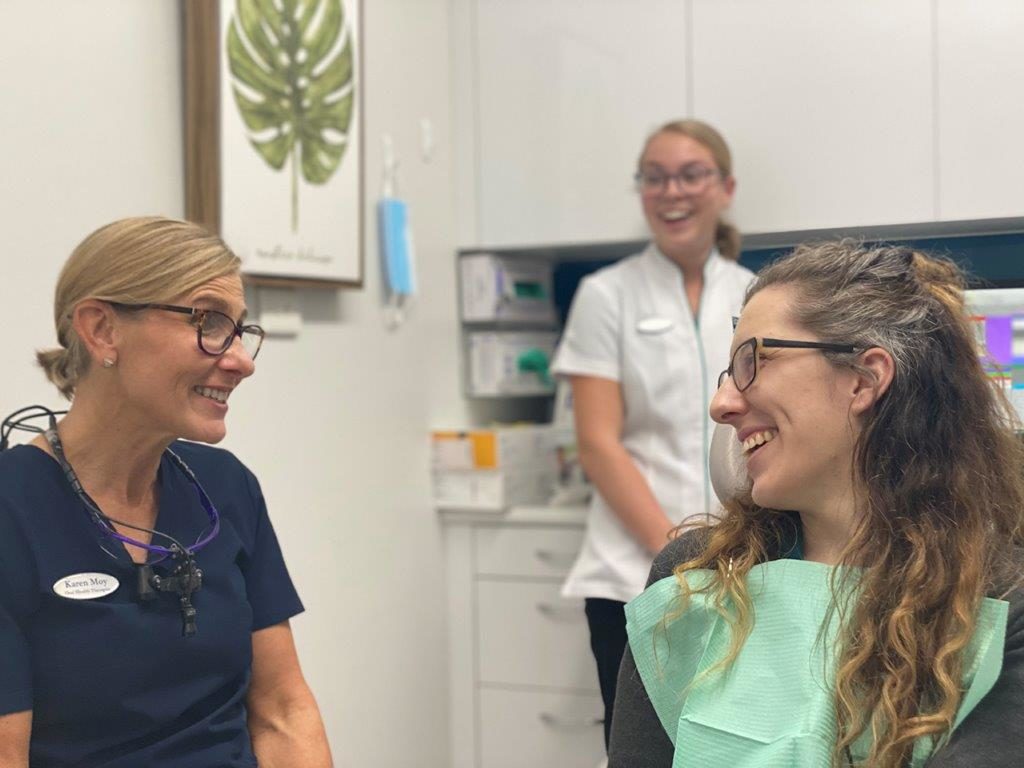
Karen is an Oral Health Therapist (OHT) who spent over twenty years developing her career in Sydney, but had tired of city life. Then a call from her Recruitment Consultant Breanna changed her life.
Was moving to a regional town something you always wanted to do? Or what inspired the change?
A few years back I felt as though a move North would be good. The appeal of living in a big city was becoming less and less each year. With work hours reduced due to COVID-19 and being placed on Job Keeper, my future in the Sydney practice felt very uncertain.
I was ready for a change so when this great opportunity fell into my lap I didn’t think twice.
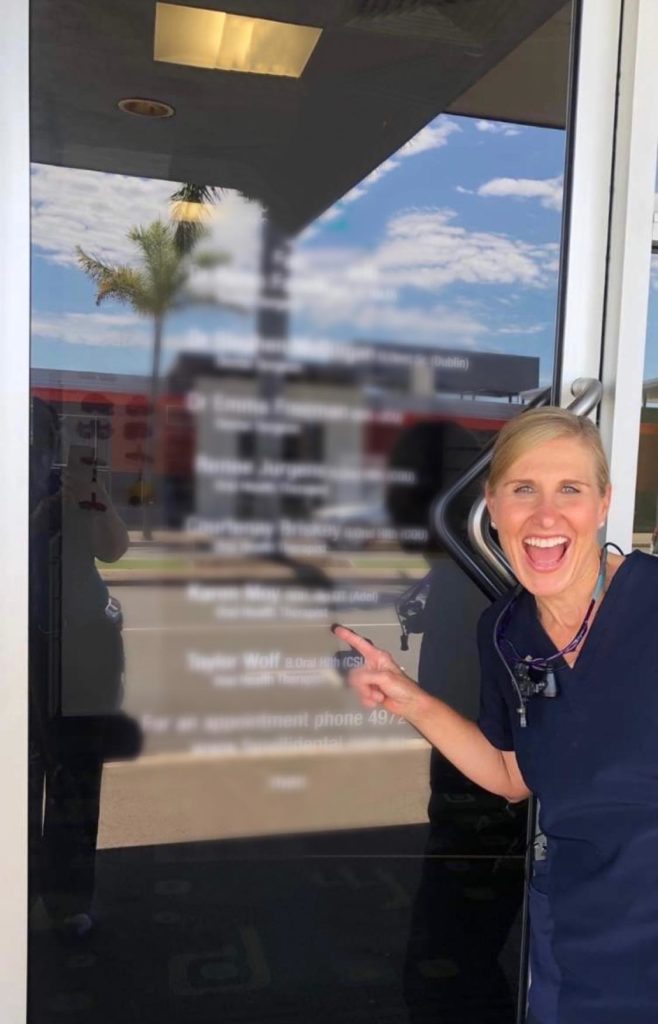
How would you compare living regionally compared to the hustle and bustle of Sydney?
Life is so easy in Gladstone. My lifestyle has not changed at all. I still do all the same activities without the high stress living. Each week gets better and better as you meet new people and get a new routine. When I look back now at Sydney I don’t know how I kept it up for so long…25 years!
How have you been spending your free time and what’s the lifestyle change been like?
When not at work, you will always find me somewhere outside swimming, cycling or running. Gladstone is a great place for all these activities. I’ve made some great friends and lots of coffee stops means lots of socialising. My lifestyle hasn’t changed at all. I do have more money to do all the activities I love because my rent is half what Sydney was. No need for trains and busses and no COVID-19!
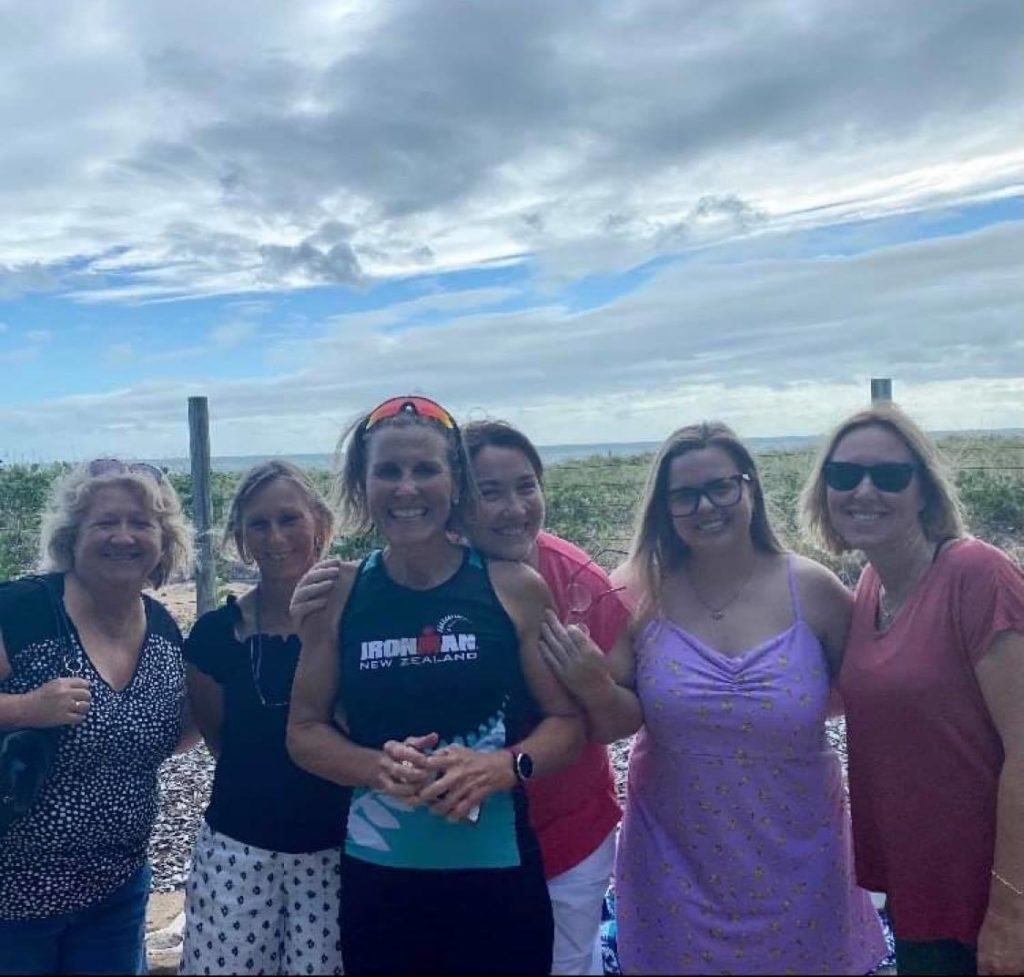
What do you love most about Gladstone, what do you enjoy most about the community?
My favorite part of Gladstone is the marina near my house and Spinnaker Park. Gladstone has a relaxed feel: no matter where you go, even in the shopping center, everyone is so friendly.
Nine months after relocating I’m still taking photos like a tourist. I’m always happy here.
How did Cornerstone and your dental practice make the transition easy?
Cornerstone were great support for my relocation. It was a difficult time in 2020. My Recruitment Consultant Breanna did all the liaising with the dental practice and also helped me organise all the bits that went along with having to quarantine. As I was working full time it was really hard to contact the government departments to get all the information ready for my quarantine. Actually, I doubt the move would have been possible without Breanna’s help.
I had quite a bit of contact with my dental practice before my start date so I really felt part of the team before I started. Everyone really seemed excited to have me there.
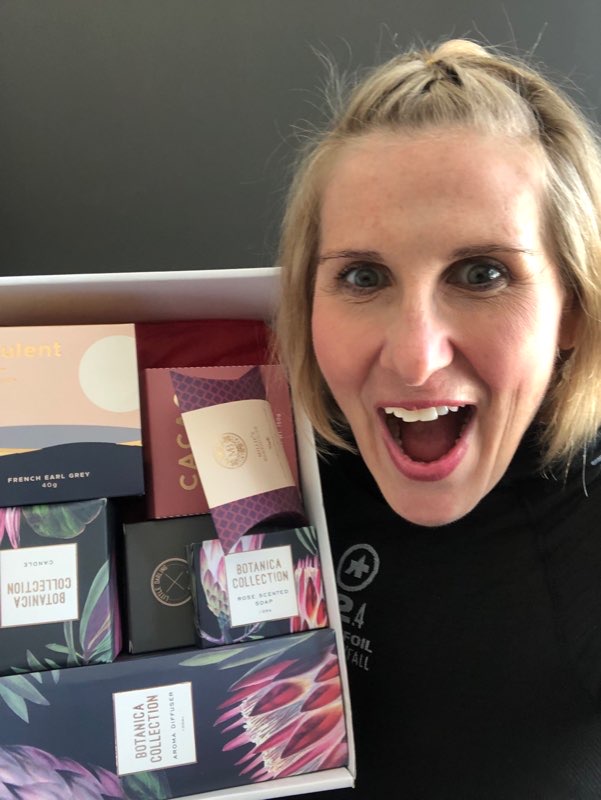
Even from my quarantine, the dental practice owner phoned me every few days, they hired me an exercise bike to help keep me occupied and the Principal Dentist dropped of a cold bag of snacks for my drive from Brisbane to Gladstone!
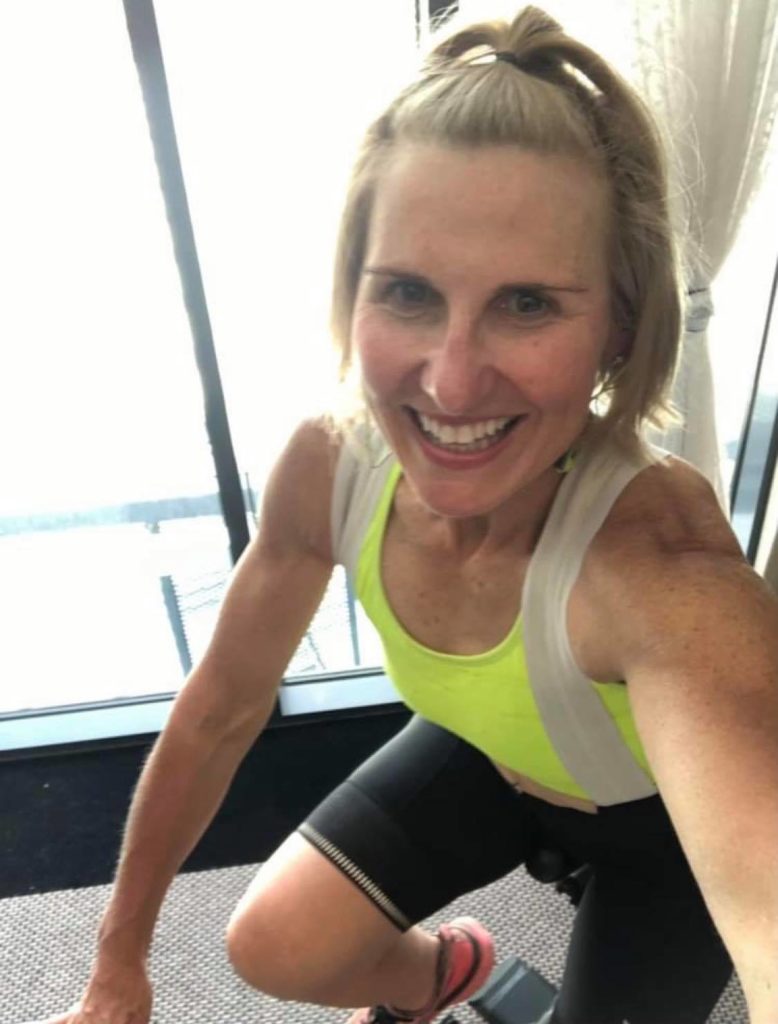
They are really great at my dental practice, such a supportive team. I’ve never worked in a place that has the same feel as this. I was prepared for a bit of time to settle in but the transition was so easy. Also I have actually upskilled since leaving Sydney.
Our Principal Dentist really is an expert in many different areas of dentistry and his focus is 100% on making sure the patients have the highest standard of care and feel looked after during their treatment. He is a great teacher and mentor. I feel so grateful to have found such a special place to work.
If you’re looking for a permanent or locum role, get in touch with the Cornerstone team today on 1300 267 300.

Working as a GP in India before her move to Australia, Dr Poonam chose to work in a hospital setting to help familiarize herself with the Australian healthcare system before pursuing her Australian GP career.
Dr Poonam was a Hospital Medical Officer in Melbourne for two years when she spoke with Cornerstone’s Senior Consultant Tiera. Her main goal was to transition into a permanent role in General Practice and she wanted a practice where she was well supported.
“The role I found for Dr Poonam ticked all the boxes as she does hospital rotations in the morning and then goes into the practice and it’s all within close proximity to Adelaide. I tried to make the process easier by helping her to apply for her 3GA training programs in order to eventually gain her fellowship” Tiera explained.
She has now begun her More Doctors for Rural Australia Program (MDRAP) placement in Port Pirie, South Australia. She specifically chose rural South Australia because of the many options and extensive support programs available to International Medical Graduates (IMGs).
“Moving to the country, I live alone here, and that’s a big challenge for me now. COVID has probably caused more damage than I imagined, as my husband is stuck in India and I cannot visit my sister and her family in Melbourne due to inter-state border restrictions. But Port Pirie has been fantastic and the community has been very welcoming. My doctors and my admin staff are an excellent team, they’re very supportive and are always there for me. And it’s a very small community and almost everybody knows each other.”
Poonam admits that while the initial few weeks were a roller coaster ride, she loves her job.
“I love working as a GP in country SA because of the variety of cases I see here. You need to know every condition, including emergency skills as well. There’s a lot of interesting cases that I see here. And one thing that I can say, if you work in a rural practice you can pass your fellowship easily.”
While taking the responsibilities and challenges in her stride, Poonam has found the support from the community and her new practice invaluable.
Sections of this article were reproduced with permission from training provider Rural Doctors Workforce Agency.

If you have always been meaning to get onto the Podcast train, this is certainly the year to do it as we all go virtual in our daily lives.
Podcasts are perfect for clinicians who are always on the go. The audio format makes it easy to fit into your everyday life, whether that is on your way to work, at the gym or while cooking dinner.
Whether you are a Social Worker, Counsellor or Psychologist, you are no doubt always looking to update and expand your knowledge. Finding time to do this can be tough, especially during a pandemic!
There are a huge number of podcasts that are relevant to practicing and aspiring Allied Health professionals. If you are new to the podcast life, we have put together a list of favourites chosen by our community of Socials Workers to get you started.
If you have any other podcasts you would recommend, we would love to hear from you.
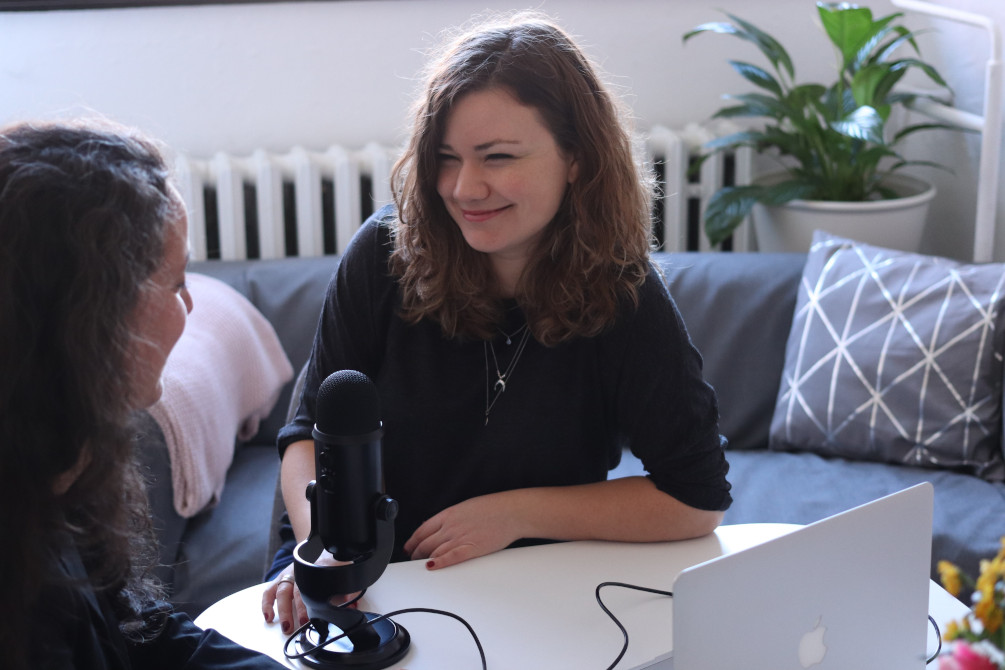
The Modern Therapist’s Survival Guide
Where Therapists Live, Breathe, and Practice as Human Beings. It’s time to reimagine therapy and what it means to be a therapist.
Listen on Apple Podcasts or Spotify
Good Life Project
Inspirational, intimate and disarmingly unfiltered conversations about living a fully-engaged, fiercely-connected and meaning-drenched life.
Listen on Apple Podcasts or Spotify
The Social Work Podcast
Provides information on all things social work, including direct practice (both clinical and community organising), research, policy, education…and everything in between.
Listen here
Where Should We Begin? with Esther Perel
Listen to the incomparable therapist Esther Perel counsel real couples as they reveal the most intimate, personal, and complicated details of the conflicts that have brought them to her door.
Listen on Apple Podcasts or Spotify
The Happiness Lab
You might think you know what it takes to lead a happier life… more money, a better job, or Instagram-worthy vacations. You’re dead wrong.
Listen on Apple Podcasts or Spotify
The Inside Social Work Podcast
This podcast aims to inspire social workers to discover new areas of practice, gain insight into specialty areas and learn new skills, how to combine different specialities and be motivated and inspired.
Listen on Apple Podcasts or Spotify
Talking to Change – A Motivational Interviewing Podcast
Hosted by Glenn Hinds and Sebastian Kaplan, is a series of conversations exploring Motivational Interviewing (MI) and its influence on supporting individuals and groups as they make positive health and lifestyle changes.
Listen on Apple Podcasts or Spotify
Unlocking Us with Brene Brown
I’ve spent over 20 years studying the emotions and experiences that bring meaning and purpose to our lives, and if there’s one thing I’ve learned it’s this: We are hardwired for connection, and connecting requires courage, vulnerability, and conversation.
Listen on Apple Podcasts or Spotify
Therapy Chat
Laura Reagan, LCSW-C, Psychotherapist, Burnout Prevention Consultant and Certified Daring Way™ Facilitator interviews guests to discuss holistic and alternative approaches used in psychotherapy, counseling, coaching and healing sessions.
Listen on Apple Podcasts or Spotify
The Doctor Paradox
The Doctor Paradox is about addressing why despite having incredibly meaningful jobs, doctors are increasingly unhappy in their work.
Listen on Apple Podcasts
With many professionals experiencing significant disruption at work, there has never been a better time to consider your career opportunities during COVID-19. The market will pick up, and when it does you want to make sure you are primed to secure the best roles.

1. Call your recruiter
Now’s the time to be registering with your recruiter and making sure you are keeping them up to date with your availability. The best jobs don’t get advertised by recruiters because they are filled with readily available candidates. This is especially the case now with so many available candidates on the market. Know what you want and be proactive. Keep in regular contact with your recruiter or get them to source your dream role. You want to be at the front of their mind when jobs start flowing through.

2. Update your CV
It takes an employer just 15 seconds to read your CV and determine your suitability for a role.
COVID-19 has changed the world in which we live. And so our CV needs to change with it. Employers have less time and attention span and need to understand what you offer them quickly and easily.

The best way you can do this is ensure your most relevant experience and qualifications are at the start. Don’t overload your CV with too much detail, employers simply won’t have the time to read it. Keep it short (max. two pages), specific and relevant to the role you are applying for. Use bold and bullet points to highlight your most relevant experience so it’s easy to refer to. Don’t feel tempted to add your photo or a colourful design – that won’t land you the job!
3. Do a social media audit
If you are active on Facebook or Instagram or even if you have profiles out there you haven’t touched in years, it’s time to do an audit of your social media profiles.

Be sure to check your privacy and security settings are maximised to ensure your personal accounts remain private.
Sometimes, despite your best efforts, there are still pictures and posts that are accessible. Consider your profile picture. What would a prospective employer think?
Don’t forget it won’t just be your employer who will check out your profile. Colleagues, customers and stakeholders will too. What message does your profile photo send? You can guarantee most employers don’t want to see a moody bathroom selfie or you on a night out after a few drinks.
Check out which posts are public and what comments are visible. If you are partial to a Facebook rant or have a bit of a potty mouth, this may work against you.
4. Fix your LinkedIn profile
Now’s the time to update your LinkedIn profile. Don’t have a LinkedIn profile? There has never been a better time to get one.
LinkedIn has over 675 million members worldwide. It enables you to manage your professional identity, build and engage with your professional network and access knowledge, insights and opportunities.
Employers use it to check you out. Recruiters use it to approach you about new opportunities and you can use it to stay up to date with your industry.

Many employers and recruiters use it as part of their short listing process, so create an all star profile. Add a great professional photo, list your experience, get skills endorsed by colleagues, ask for recommendations from previous employers and write a strong ‘about’ section.
If you would like to know more about how to get Job-Fit, or discuss your next career move, call our team on 1300 267 300.
BBC One recently followed UK Dual-Registered Nurse and Midwife Nicola on her journey to secure a job in Brisbane, Queensland. We helped her to understand the lay of the land in Australia and how to find a nursing or midwifery job “down under”. Here are our tips for UK Nurses and Midwives considering a career move to Australia.
What are the steps to getting a job in Australia?
- Visa: Firstly, you need to organise the appropriate visa to allow you to come to Australia and work. You can do this yourself online or through a reputable migration agent. One of the key decisions to make is whether you’re looking to come to Australia short-term (Working Holiday Visa) or long-term (Permanent Residency).
- AHPRA registration: UK nursing qualifications are recognised in Australia, but once you have your visa sorted you will need to register with the federal government agency AHPRA (Australian Health Practitioner Regulation Agency). This is a reasonably straight forward process and generally takes approximately three months.
- Get work ready: Make sure all of your immunisations and serology are up to date and that you’ve done your police check, so you can hit the ground running when you arrive in Australia.
What type of jobs can I apply for?
We place Registered Nurses (RNs) in all specialities and Midwives in every clinical setting imaginable, whether that be hospital, private practice or in an Aboriginal Health Clinic. We offer locum/agency roles, contract and permanent roles across all states and territories in Australia. Our most in demand roles are Mental Health Nurses, Emergency Department RNs and dual-registered Midwife/RNs.
Can I work wherever I want in Australia?
Cornerstone predominately assists with vacancies in rural and remote communities in both coastal and country locations. If you let us know what state in Australia and what kind of community you are most interested in, we can look to match you with a vacancy there.

Can you help with organising my visa?
Unfortunately we do not sponsor or organise visas on your behalf. You’ll need to organise your own visa before you arrive in Australia and before we are able to place you in a role.
Let’s not beat around the bush. What’s the rate of pay?
Cornerstone Nurses & Midwives are some of the highest paid in the industry. Depending on the state the job is based in the rate will vary, but we’re happy to estimate what salary we think you could achieve after we understand your clinical skills and experience.
I have my visa/working rights in Australia, how can you help me?
Once you have your visa and you are ready to come to Australia or have already arrived, get in touch with our Nursing & Midwifery Division and you’ll be assigned your own personal consultant to assist you.
Our nurses say they feel completely supported and safe in the hands of our friendly and helpful team.
Our team can help you with everything from finding the right position, the location, the clinical setting, accommodation, flights and making sure you are completely set up and comfortable in your new environment.
Get in touch with the Nursing & Midwifery Division today and follow us on our socials for the latest job updates.
Work in Australia
At Cornerstone Medical Recruitment (cmr), we believe that creating a happier healthcare workforce means better health for us all. That’s why we’re dedicated to connecting nurses and midwives with amazing opportunities across Australia.
Work With Us
Dr Kenny Parra lives the best of both worlds – he has a permanent part-time role as a Salaried Medical Officer (SMO) in a rural emergency department, is an Australian College of Rural and Remote Medicine registrar, does some hours in intensive care and does locum retrieval work during the cooler months.

“I started locuming six years ago and, initially was attracted to the higher paying rates. “Particularly when my children were young, there was the flexibility of working in my spare time and to choose the shifts I wanted to do,” said Dr Parra.
“I love exploring and traveling to new areas and locum jobs have taken me to every state and territory in Australia, especially when doing retrieval locum jobs. It has also added an extensive range of experiences and
knowledge to my practice.
“Retrieval is extremely broad. From kids, to trauma to burns and myocardial infarcts.
“There are a lot of cases that cannot be managed at remote, small, nurse-only clinics and we take these patients to bigger regional hospitals.
“I have transported trauma patients on a stretcher, on the back of a ute or on our way to the airstrip. Once, we had to go to a station to pick up a trauma patient, he had spinal injuries and the only vehicle available was a
ute. We used our stretcher, immobilised the patient and transported him to the plane on the back of a ute.
We have picked up trauma patients public roads and have transferred septic patients from small hospitals to definitive care.
“I have seven years of intensive care, five years of retrieval and three years of emergency experience. I’ve been employed by Queensland Health as a permanent, part-time rural emergency SMO for two years. I also do
a small amount of ICU hours (to keep my ICU skills up)
and locum as a retrieval doctor.

“Retrieval puts you in an unknown environment with limited resources and makes you resourceful. I also found that there was so much need in remote communities for help and wanted to apply my acute care skills out of intensive care.”
Dr Parra said there were many things he learned doing locuming work that he then took back and applied to his practice.
“After working in a few EDs where nurses didn’t cannulate, we trained all our nurses and now they are all proficient at IV cannulation.
“I learned different techniques for reduction of shoulder dislocation, management of a very difficult airway on a patient with severe facial subcutaneous emphysema and different nerve blocks,” he said.
Cornerstone’s Senior Recruitment Specialist Sahra Rabaud said locuming was a great way for doctors to do the work they love, but may not get the chance to do full-time, like retrieval.
“It’s nice knowing you are really helping a facility or a community in need. It’s great to find roles for doctors that they haven’t been offered before,” said Sahra.
*This article features a Cornerstone Doctor and appeared in the AMA Queensland Doctor Q Summer Edition 2019 Magazine.

Dear Santa. I have been a very good employee this year. I have laughed at my boss’s jokes. I have worked my hours with a smile, and have done what was asked of me. But I am in the same place I was a year ago. All I want for Christmas is career progression.
It’s up to you, not your boss
It’s common for people to expect career progression simply because they turned up and did their job.
And when they don’t get it, they blame their boss, their boss’s boss and the colleague who did get promoted. But career progression is largely up to you. And in many cases you need to go out and make it happen.
The end of the year is fast approaching and with every Christmas present we wrap, there is the tendency to start to “wrap up” the work year just as quickly.
But now is not the time to shut down mentally on the work front. In fact, it is the perfect time to reflect on the year that has been, and start to consider your professional aspirations for next year.
A great place to start is by dusting off those resolutions you made nearly 12 months ago (no doubt under the influence of a little Christmas cheer).
- What did you set out to achieve?
- Where did you want your career to go?
- Why aren’t you there yet?
Too often we make resolutions in the afterglow of the holiday period, but by February they are a distant memory. Gathering dust on the resolution shelf as the momentum of the new work year carries us away.
So how can you make your career goals stick next year?
What had you hoped to achieve this year?

- Did you get there? If not, why not?
- What could you have done to achieve your goals?
- Was your manager aware of your career goals?
- Did you actively work toward these together?
- Did your personal commitments get in the way of your professional aspirations?
- Were your goals realistic?
- Were you really committed to achieving them?
It’s important to be honest with yourself. If you don’t take complete stock of what this year’s journey has been, then you won’t be able to clearly identify what mental roadblocks you need to release in order to have the best chance to achieve career progression next year.
What do you want to achieve next year?

- What did you learn this year?
- What worked or didn’t work?
- What could you have done better?
- Have your career goals changed?
As cliché as it sounds, a new year can feel like ‘wiping the slate clean’. Consolidate what you have learnt this year and use the opportunity of a fresh start to set you on the right career path.
It’s time to make it happen
The year is not over yet! Yes, there are only a few weeks left and they may seem consumed with Christmas parties and social events, but there is still time for reflection and preparation. Taking the time to set yourself up for the new work year, means you can begin working toward your career goals the minute you arrive back in the office next year.

A few other tips to help you along the way include:
- Write your goals down – visit them regularly
- Challenge yourself with the goals you set – but don’t set too many!
- Get your manager or team involved
- Take risks
The new year brings a new start. Taking the time to reflect, define your goals and carefully plan and execute a strategy to achieve those goals will ensure you have the motivation and confidence to steer your career in the right direction.
Ultimately, it comes down to you. How much you want it, and how hard you are going to work for it. As Randy Pausch said in his infamous last lecture, “luck is where preparation meets opportunity”.
Don’t let your moment pass you by because you didn’t turn up for it! And don’t rely on Santa to leave a promotion for you under the Christmas tree.