
The Leadership Principle That Changes Everything in Healthcare
Julie Quade did not set out to become a manager. She set out to find a leader worth following and when she could not find one, she decided to become that person instead. Now, as Northern New South Wales Health Allied Health Manager, she oversees occupational therapy, dietetics, speech pathology, social work, physiotherapy, podiatry and genetic counselling across a district that stretches from Grafton to Tweed.
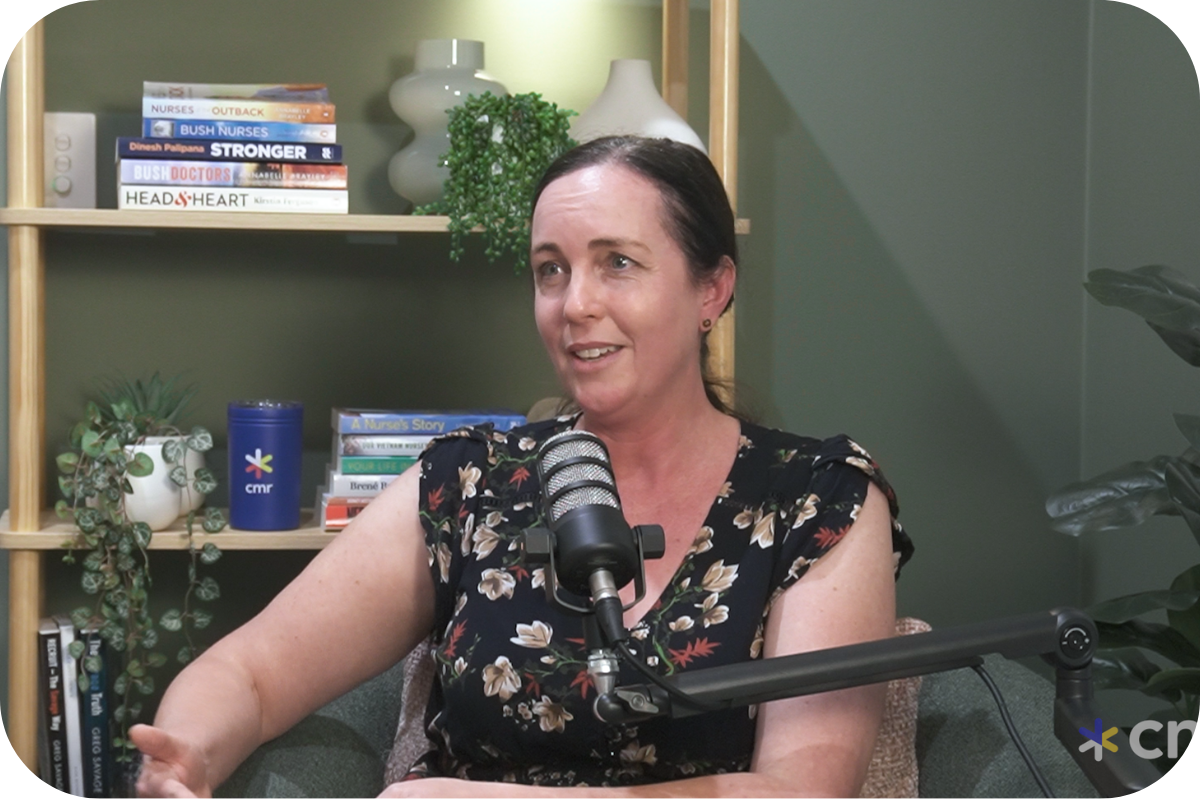
In this episode of It Takes Heart, Julie shares what she has learned about leading people through one of the most demanding systems in the country.
From the Farm to Dietetics
Julie grew up on a small farm in Tullamore, in rural New South Wales, where the career options she could see were teaching, farming or nursing. She was heading toward teaching until a dietitian visited her PDHPE class in Year 11 and talked about the food pyramid.
“I thought, wow, I could do that. I knew I could.”
She went on to study dietetics, deliberately built a broad clinical base in her early years, including community, hospital, eating disorders and paediatrics. This allowed her to take on diverse locum roles when she moved to the UK to travel. By 2019, she had stepped away from clinical practice entirely and moved into leadership and project redesign roles. She has not looked back.
Why Clinicians Move Into Leadership
Julie’s motivation for stepping into management was not ambition. It was frustration. She had wanted a leader who made decisions for the collective rather than for personal comfort, and she had not found that. So she decided to learn the system, move into that space, and do it differently.
“I thought I’m helping a patient one-on-one, but I could have a greater impact if I can actually influence the clinicians and the workforce. Which then I can help more patients.”
That logic, scaling impact rather than delivering it directly, is what drives how she leads today. Her job, as she sees it, is not to face upward and please the organisation. It is to serve the people who report to her, so they can serve their patients.
What Great Leadership Actually Looks Like
Julie is specific about what she looks for when identifying emerging leaders in her teams. She watches for people who think about the collective rather than themselves when making decisions. She looks for emotional steadiness, the ability to stay calm when things get difficult and the capacity for clear thinking under pressure.
“Are they emotionally reactive in situations, or are they calming? Are they able to think when they’re stressed?”
She also looks for people who can take a complex, layered healthcare situation and simplify it, then communicate it clearly and build the relationships needed to move things forward. In a system as large and interconnected as public health, that combination is rarer than it sounds.
Buffering the Noise
One of the clearest threads running through Julie’s leadership philosophy is the idea of protecting her team from the noise of the system. New South Wales Health is large, fast-moving and frequently reactive. Her job, she believes, is to absorb as much of that pressure as possible before it reaches the clinicians who are focused on patient care.
“Don’t worry about all the other stuff that’s going on. You just be the best clinician you can be with the patient in front of you at the time. That’s what I ask of you.”
She says the same to her managers: focus on creating a great environment for your staff. Advocacy upward, resourcing decisions, systemic pressure: that is for her to carry. She sees this as the core transaction of effective leadership in healthcare.
On Burnout: The Internal Work
Julie has not experienced burnout herself, and she is thoughtful about why. It comes down to what she calls the stress cycle: understanding how to move through activation and return to a regulated state, rather than staying stuck in either extreme.
She ran a development day for her managers focused specifically on nervous system regulation, and she is open about the fact that this is not just professional development. It is personal practice.
“You’re not meant to be zen all the time. A flexible nervous system is being activated and then coming back into your window of tolerance.”
Her own toolkit includes movement, journaling, time in nature and co-regulation with trusted colleagues. She is also deliberate about expanding her tolerance for stress over time, taking on new challenges, saying yes to uncomfortable things and updating what she describes as her psyche’s programming.
Her advice when you notice yourself getting activated: slow down deliberately, check your body for physical signals (tight shoulders, shallow breathing, scattered thinking) and do not make decisions or have difficult conversations until you are back in a regulated state.
Watch Season 3, Episode 44 of It Takes Heart with Julie Quade now!
More about Julie’s organisation shoutout, Angel Flight Australia
Angel Flight Australia is a charitable organisation coordinating free, non-emergency flights and ground transportation so people who live in rural and regional Australia can access the specialist medical treatments they need.
Subscribe to It Takes Heart
Join us to discover real-life stories of passion and purpose, insight and inspiration from people on the inside and tales that are equal parts heart-warming, heart-wrenching and hilarious.


You might also like…

Understanding Section 19AB and DPA in Australia
Learn how Section 19AB, DPA locations and the 10-year moratorium affect overseas-trained doctors, including exemptions, scaling and Medicare access.
Read more
Rural vs Metropolitan General Practice in Australia: Which Is Right for You?
Compare rural vs metropolitan general practice in Australia, including lifestyle, earning potential, clinical experience and career opportunities for GPs.
Read more
On the Highway to Health
Dr Rolf Gomes, founder of Heart of Australia, shares how mobile health clinics are bringing specialist care, CT scans and life-saving services to rural Australians.
Read more
Memberships:




Cornerstone Medical Recruitment acknowledges the Traditional Custodians of country throughout Australia and their connections to land, sea and community. We pay our respects to Elders past and present.